


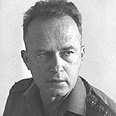
Yitzhak Rabin, Labor
None
Yitzhak Rabin (1922-1995) was one of Israel's leading military figures and political leaders. As prime minister, he led Israel during the period of the Oslo Accords, which attempted to set the groundwork for a peace agreement with the Palestinians. On November 4, 1995, right-wing extremist Yigal Amir shot and killed Rabin at close range following a peace rally in Tel Aviv.
Rabin was born in Jerusalem, when the British controlled Palestine, and grew up in Tel Aviv. He attended the Kaduri Agricultural High School and hoped to become an irrigation engineer.
But in 1941, Rabin joined the Haganah, which preceded the Israel Defense Forces, and quickly rose to the senior ranks.
During the 1948 War of Independence, Rabin directed the defense of Jerusalem and headed battles against the Egyptian army in the Negev. In 1962, he was appointed Chief of Staff of the IDF.
It was under Rabin's command that the IDF defeated Egypt, Syria and Jordan in the 1967 Six Day War.
Following the war, Rabin retired from the IDF and in 1968 was appointed ambassador to the United States. In 1973, Rabin was elected to the Knesset for the first time, as a member of the Labor Party.
In 1974, after Prime Minister Gold Meir resigned in wake of Israel's heavy losses in the 1973 Yom Kippur War, Rabin was elected Labor Party Chairman and became prime minister.
In July 1976, Rabin ordered Israeli commandos to carry out the daring Operation Entebbe rescue of a plane hijacked by Palestinian terrorists that was being held in Uganda.
In 1977, Rabin resigned from office but remained in the Knesset after it was reported that his wife, Leah, had maintained a dollar bank account in the U.S. when he was serving as a diplomat there. At the time, Israeli law made it a misdemeanor to operate a foreign bank account.
Rabin later served as defense minister in several unity governments in the late 1980s and took a harsh stand during the first intifada, even going so far as to reportedly having encouraged troops to break the bones of Palestinian demonstrators.
In 1992, Rabin was again elected prime minister and played a leading role in the signing of the Oslo Accords, which created the Palestinian Authority and granted it partial control in areas of the Gaza Strip and West Bank. Rabin also signed a peace agreement with Jordan.
For his role in the Oslo Accords, Rabin was awarded the 1994 Nobel Peace Prize, along with Yasser Arafat and Shimon Peres.
Related links:
